
BEFORE AND AFTER: Sergei Eisenstein and Kira Muratova
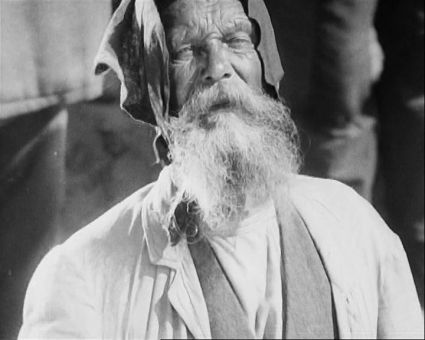
Saturday October 18
2.00 pm The General Line, 1928 by Sergej Eisenstein (121 min)
Sunday October 19
2.00 pm The Asthenic Syndrome, 1989 by Kira Muratova (153 min)
Both films will be shown at Carlberg Tap E and introduced by curator Anders Kreuger from Lunds Konsthall
Two Russian films, made by very different authors with very different methods. They form a diptych portrait of the Soviet mind, 'before and after' the promised Communist future that was to be achieved through political control of all aspects of life.
The General Line from 1928 by Sergei Eisenstein (1898-1948)
has been called a 'linear' and 'tonal' film. It is a fairytale of collective will and technical progress at a stage when the collective and state farms were still a 'voluntary' option for Russia's majority population, the peasants. Just a couple of years later, Stalin's forced collectivisation of agriculture would lead to the starvation and deportation of tens of millions of people.
The Asthenic Syndrome from 1989 by Kira Muratova (born 1934)
has been hailed as the greatest film of the perestroika ('reconstruction') years that concluded the Soviet experiment. Eisenstein's carefully engineered narratives have imploded, and Muratova's characters are adrift in the bleak and coarse reality of decaying real socialism, redeemed only by her mastery of visual phrasing and her devastatingly precise use of theatrical detail.
The screenings are a part of Opening Hours and are organised in collaboration with Lund Konsthall in Sweden in relation to the current exhibition After Eisenstein , which runs at Lunds Konsthall until November 2, 2008.
2.00 pm The General Line, 1928 by Sergej Eisenstein (121 min)
Sunday October 19
2.00 pm The Asthenic Syndrome, 1989 by Kira Muratova (153 min)
Both films will be shown at Carlberg Tap E and introduced by curator Anders Kreuger from Lunds Konsthall
Two Russian films, made by very different authors with very different methods. They form a diptych portrait of the Soviet mind, 'before and after' the promised Communist future that was to be achieved through political control of all aspects of life.
The General Line from 1928 by Sergei Eisenstein (1898-1948)
has been called a 'linear' and 'tonal' film. It is a fairytale of collective will and technical progress at a stage when the collective and state farms were still a 'voluntary' option for Russia's majority population, the peasants. Just a couple of years later, Stalin's forced collectivisation of agriculture would lead to the starvation and deportation of tens of millions of people.
The Asthenic Syndrome from 1989 by Kira Muratova (born 1934)
has been hailed as the greatest film of the perestroika ('reconstruction') years that concluded the Soviet experiment. Eisenstein's carefully engineered narratives have imploded, and Muratova's characters are adrift in the bleak and coarse reality of decaying real socialism, redeemed only by her mastery of visual phrasing and her devastatingly precise use of theatrical detail.
The screenings are a part of Opening Hours and are organised in collaboration with Lund Konsthall in Sweden in relation to the current exhibition After Eisenstein , which runs at Lunds Konsthall until November 2, 2008.